
ARTICLE CATEGORY
Operational Policies & SOPs
Build clear technology procedures for documentation, access management, maintenance, incident response, vendor coordination, system changes, and reliable day-to-day operations.

START HERE
Operational Network Policies for Communities and Residential Properties
Reliable infrastructure requires more than good equipment. This practical framework establishes ownership, access, documentation, change control, backups, maintenance, and incident-response expectations.
KNOWLEDGE LIBRARY
Explore the Articles
Practical guidance, planning principles, and technical explanations for better infrastructure decisions.

Basic Network Policies Every HOA or Residential Property Should Have
Ten practical network policies give residential properties clear rules for access, guests, vendors, devices, changes, credentials, backups, incidents, documentation, and accountability.

Network Documentation Best Practices for Homes, HOAs, and MDUs
Accurate network documentation helps homes, HOAs, and MDUs troubleshoot faster, control vendors, plan upgrades, protect access, and recover confidently when systems fail.

How to Create a Simple Network Change Management Process
A lightweight change process helps residential properties plan work, control vendors, protect configurations, test affected services, recover safely, and prevent undocumented surprises.

Vendor Access and Third-Party Network Risks in HOA Networks
Outside vendors often need property-system access. A controlled lifecycle limits third-party risk through approval, identity, least privilege, monitoring, change control, and offboarding.

Guest Network Usage Policies for Residential and Community Environments
A practical guest Wi-Fi policy defines eligibility, isolation, credentials, acceptable use, privacy, performance, vendor boundaries, support, enforcement, and expectations for shared connectivity.
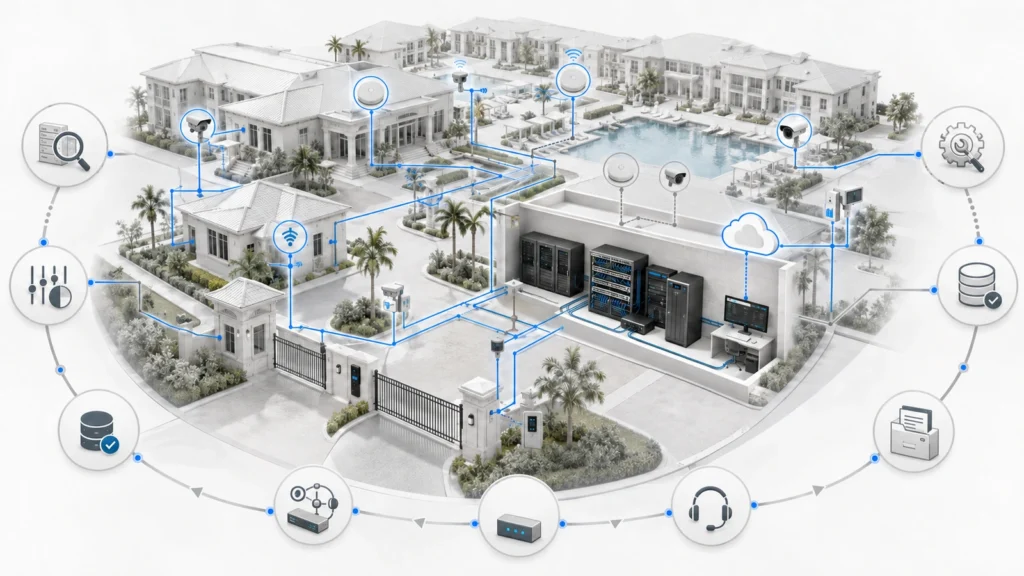
Incident Response Basics for Residential and HOA Networks
A practical incident process helps residential properties assess impact, preserve evidence, coordinate vendors, contain problems, communicate clearly, restore services, and prevent recurrence.