
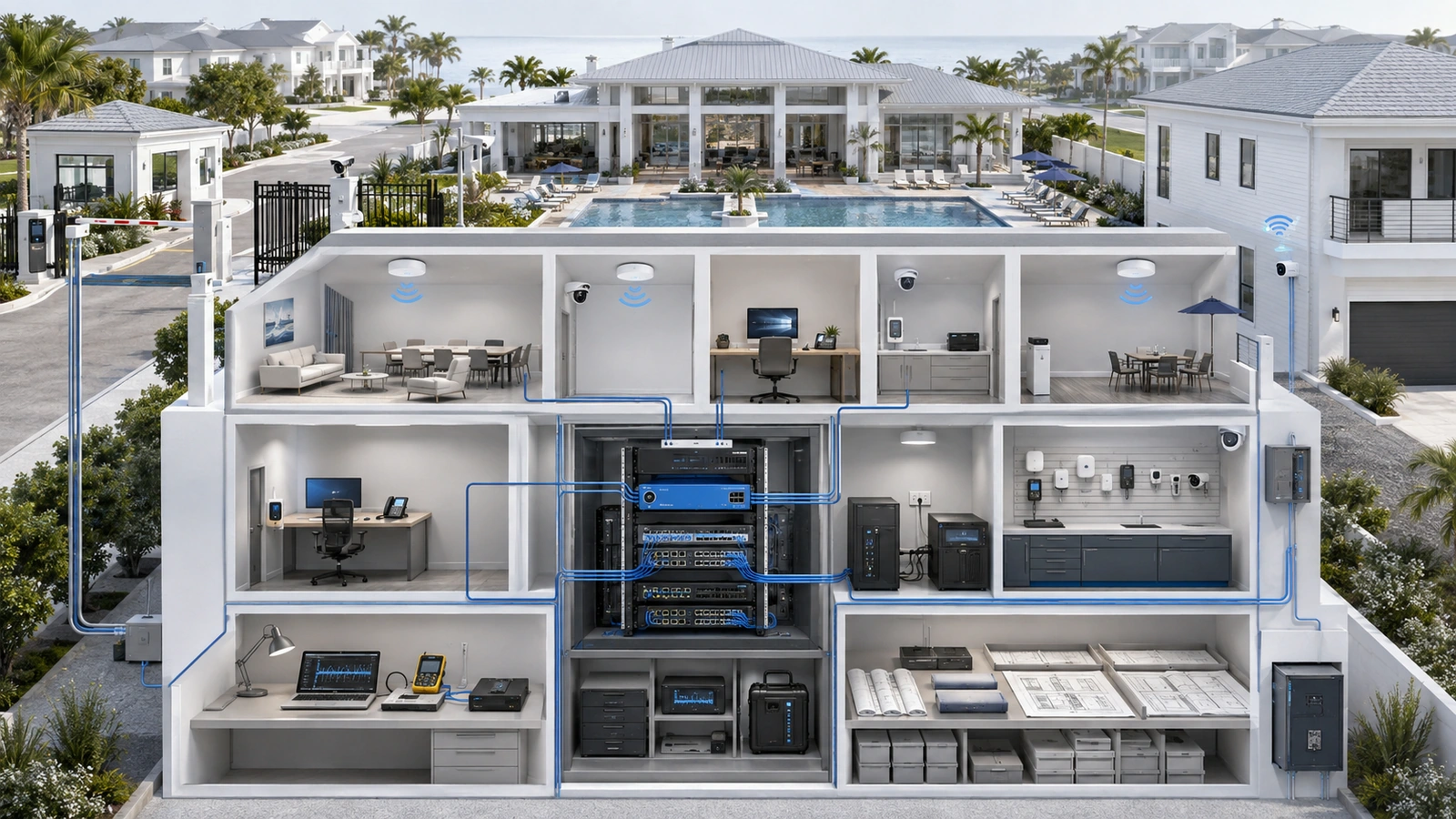
Residential networks often appear simple because the technology remains mostly invisible when it works.
Behind that simplicity, an HOA, condominium, clubhouse, gated community, or managed residential property may support staff computers, guest Wi-Fi, surveillance, gates, access control, intercoms, building systems, cloud platforms, vendors, and hundreds of connected devices.
Without basic operating rules, everyday decisions become inconsistent. A password is shared informally, a vendor retains access after completing a project, an unidentified device is connected, or a network change is made without documentation.
These are not always equipment failures. They are often policy failures.
01 Build Every Policy on the Same Foundation
Before defining individual rules, the property should establish a consistent structure for its policy library.
Each policy should identify:
- Purpose: Why the policy exists
- Scope: Which people, systems, networks, and locations it covers
- Owner: Who maintains the policy
- Authority: Who approves decisions and exceptions
- Requirements: The rules that must be followed
- Supporting procedure: How recurring work is performed
- Records: What evidence must be retained
- Review: When the policy will be evaluated and updated
These elements prevent policies from becoming general suggestions with no responsible owner or implementation path.
The formality should match the property. A private residence may keep a concise operating document. A community supporting staff, residents, vendors, security systems, and shared facilities may require separately approved policies and SOPs.
The broader governance model is explained in Operational Network Policies for Communities and Residential Properties.
02 Policy 1: Acceptable Network Use
An acceptable-use policy defines the intended purpose of property-provided connectivity and the behavior expected from authorized users.
It should identify:
- Who may use each property-provided network
- Where and when the service is available
- Whether access is provided as a convenience or operational service
- Activities prohibited by governing documents, law, or operational requirements
- Whether service may be limited, suspended, or withdrawn
- How suspected misuse is reported and reviewed
The policy should avoid promising unlimited availability, performance, security, or privacy when the property cannot guarantee those conditions.
Monitoring language should also be proportionate and accurate. The property may monitor infrastructure health, capacity, security events, and compliance with technical controls where authorized, but it should not imply unnecessary inspection of residents’ private communications.
Legal counsel should review resident-facing acceptable-use and enforcement language where appropriate, particularly when the policy interacts with association governing documents, privacy expectations, records retention, or disciplinary action.
03 Policies 2 and 3: Guest, Staff, and Administrative Access
Guest connectivity and internal operational access serve different purposes and should not be governed as though they were one service.
Guest Network Policy
The guest policy should establish:
- Who qualifies for access
- Where guest service is available
- How credentials or onboarding are managed
- Whether sessions, devices, or bandwidth may be limited
- Which support, privacy, and usage expectations apply
- How guest access is separated from staff and operational systems
Guest users should not receive access to property-management systems, office devices, cameras, access control, building controls, or administrative interfaces merely because they can connect to property Wi-Fi.
Staff and Administrative Access Policy
Internal access should be granted according to job responsibility rather than convenience. The policy should define approval, permitted devices, role-based permissions, multifactor authentication, access reviews, and removal when employment or responsibility changes.
Administrative privileges should be limited to authorized personnel who need them. Staff access to an application does not automatically justify administrative access to the infrastructure supporting it.
Guest-specific requirements will be developed further in Guest Network Usage Policies for Residential and Community Environments.
04 Policy 4: Vendor and Third-Party Access
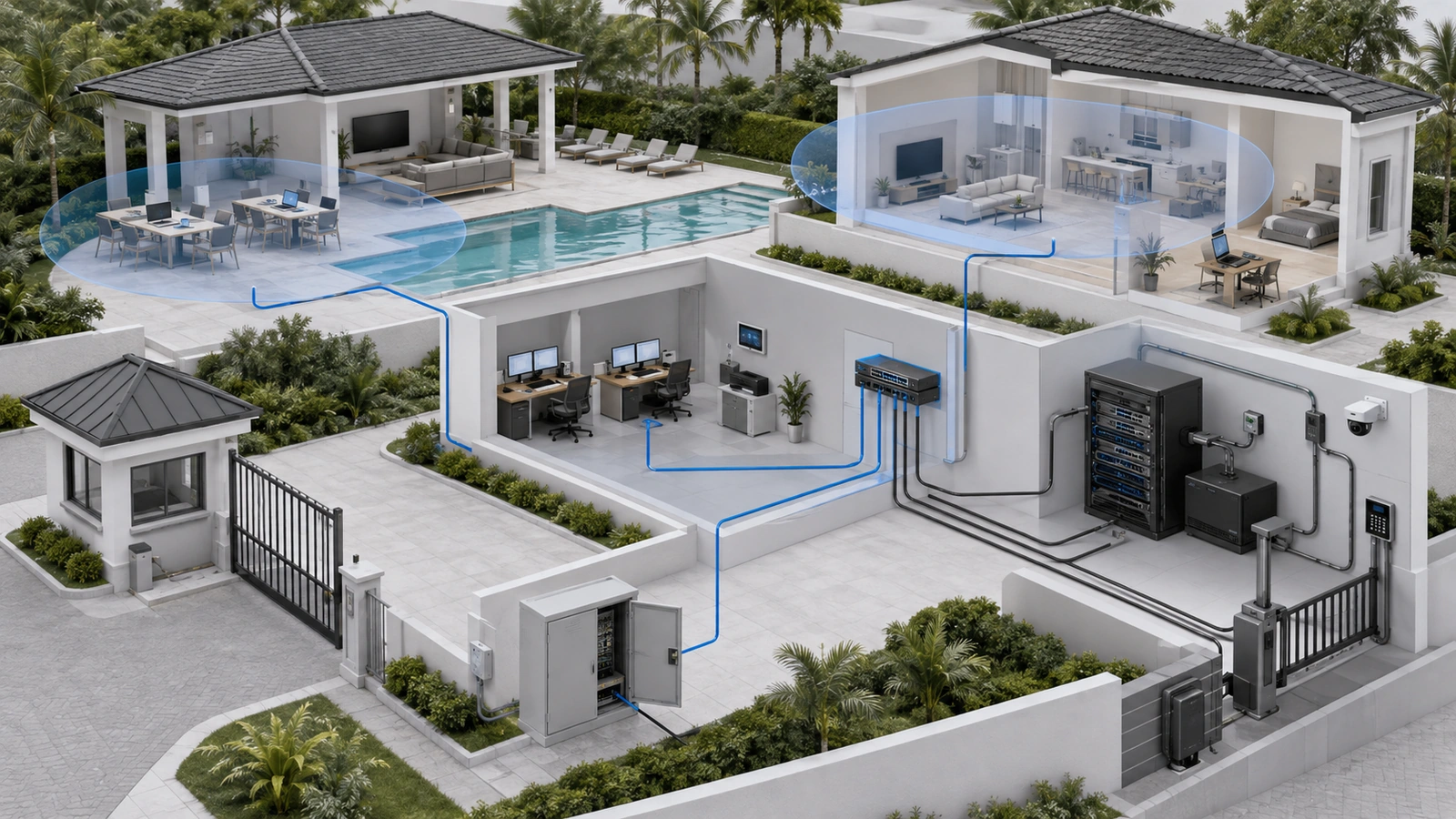
Vendors may require onsite or remote access to support internet service, surveillance, gates, access control, intercoms, elevators, audio/video systems, irrigation, automation, and other property technology.
A vendor-access policy should define:
- Who may request and approve access
- The business and technical purpose
- The specific systems and locations within scope
- Approved onsite and remote-access methods
- Identity, authentication, and MFA requirements
- Whether access is temporary or persistent
- Expected activity records and change documentation
- Conditions for suspension and removal
- Offboarding requirements when work or contracts end
Persistent vendor access may be appropriate for an approved managed service, but it should not be invisible or unrestricted. The property should know who has access, why it remains necessary, and how it can be revoked.
Third parties should receive the minimum access required for their responsibilities. A surveillance contractor does not automatically require broad access to staff, guest, access-control, or building-management networks.
The full policy is covered in Vendor Access and Third-Party Network Risks in HOA Networks.
05 Policies 5 and 6: Network Changes and Credentials
Network Change Policy
Meaningful infrastructure changes should follow a controlled process. Depending on risk, this may include firewall modifications, switch replacements, wireless changes, new network segments, firmware upgrades, remote-access changes, or adding technology that affects shared services.
The policy should require:
- A defined reason and scope
- Impact and risk assessment
- Approval from the appropriate authority
- Configuration backup or current-state record
- An appropriate maintenance window
- Stakeholder communication where service may be affected
- Testing and acceptance criteria
- A rollback or recovery plan
- Documentation after completion
Emergency changes may use accelerated approval, but they should still be documented, validated, and reviewed afterward.
Password and Credential Policy
Credentials should be stored in an approved, access-controlled vault—not in ordinary diagrams, policy documents, shared spreadsheets, text messages, or unprotected email.
The policy should establish:
- Property ownership of critical administrative accounts
- Unique named accounts where supported
- MFA and recovery requirements
- Role-based access to stored credentials
- Separate vendor and internal identities
- Review after staff, board, management, or vendor transitions
- Secure emergency-access and recovery procedures
Password changes should be triggered by risk, suspected exposure, account transitions, or system requirements—not performed blindly in a way that creates undocumented outages.
The supporting change workflow appears in How to Create a Simple Network Change Management Process.
06 Policy 7: Connected Devices and System Onboarding
Every connected device creates a technical and operational obligation. Cameras, printers, televisions, controllers, sensors, staff computers, vendor appliances, and smart-property devices all consume infrastructure and may introduce security, privacy, support, and lifecycle requirements.
A device-connection policy should define:
- Who may approve new devices
- Which network or segment the device should use
- What information must be recorded
- Minimum configuration and security requirements
- Who owns maintenance, updates, batteries, subscriptions, and replacement
- Whether remote or cloud connectivity is required
- How unsupported or unnecessary devices are removed
Approval should consider more than whether a device can connect. The property should understand its purpose, owner, support model, data behavior, network dependency, expected lifespan, and effect on shared capacity.
Personal devices, guest devices, staff devices, and operational technology may require different access zones and support expectations.
07 Policies 8 and 9: Backups and Incident Reporting
Backup and Configuration Management Policy
Critical configurations and operational records should be protected against device failure, incorrect changes, account loss, vendor transitions, and local disasters.
The policy should define:
- Which devices, platforms, and records require backups
- Whether backups are automated, manual, or both
- Who owns and verifies the process
- When backups are created or updated
- How versions and retention are managed
- Where backups are stored and how they are encrypted
- How authorized recovery access is maintained
- How restoration is validated
A successful backup notification is not proof that recovery will work. Restoration procedures and critical backup files should be validated at intervals appropriate to the property.
Incident Reporting Policy
Incident reporting establishes how staff, management, residents, or vendors raise an operational or security concern. It is the entry point into incident response, not the complete response process.
An initial report should capture:
- What was observed
- When and where it occurred
- Who reported it and how they can be contacted
- Which users, areas, or services appear affected
- Whether safety, security, access, or critical operations are involved
- What actions have already been taken
- Any available messages, photographs, logs, or timestamps
The policy should identify reporting channels, escalation criteria, responsible responders, and expectations for preserving evidence. Users should avoid uncoordinated troubleshooting that can increase impact or erase useful information.
08 Policy 10: Documentation and Recordkeeping
Documentation policy defines what the property must know about its infrastructure and who is responsible for keeping that information current.
The required records may include:
- Physical and logical network diagrams
- Equipment inventory and locations
- Internet circuits and provider information
- Wi-Fi networks and their approved purposes
- Network segments and critical system dependencies
- Important cable, fiber, rack, port, and power relationships
- Vendor contacts, access scope, licenses, and contracts
- Administrative-account ownership and credential-vault location
- Configuration backups and recovery procedures
- Change, maintenance, incident, and review histories
The policy should identify one authoritative repository, access restrictions, document owners, review dates, version history, backup requirements, and retention expectations.
Sensitive diagrams, addressing details, recovery information, and vendor-access records should not be distributed more broadly than necessary. A sanitized summary may be maintained separately for board, management, budgeting, or stakeholder use.
Documentation should be updated as part of the associated change, project, or incident—not postponed indefinitely after technical work is complete.
09 Adopt, Apply, and Review the Policies
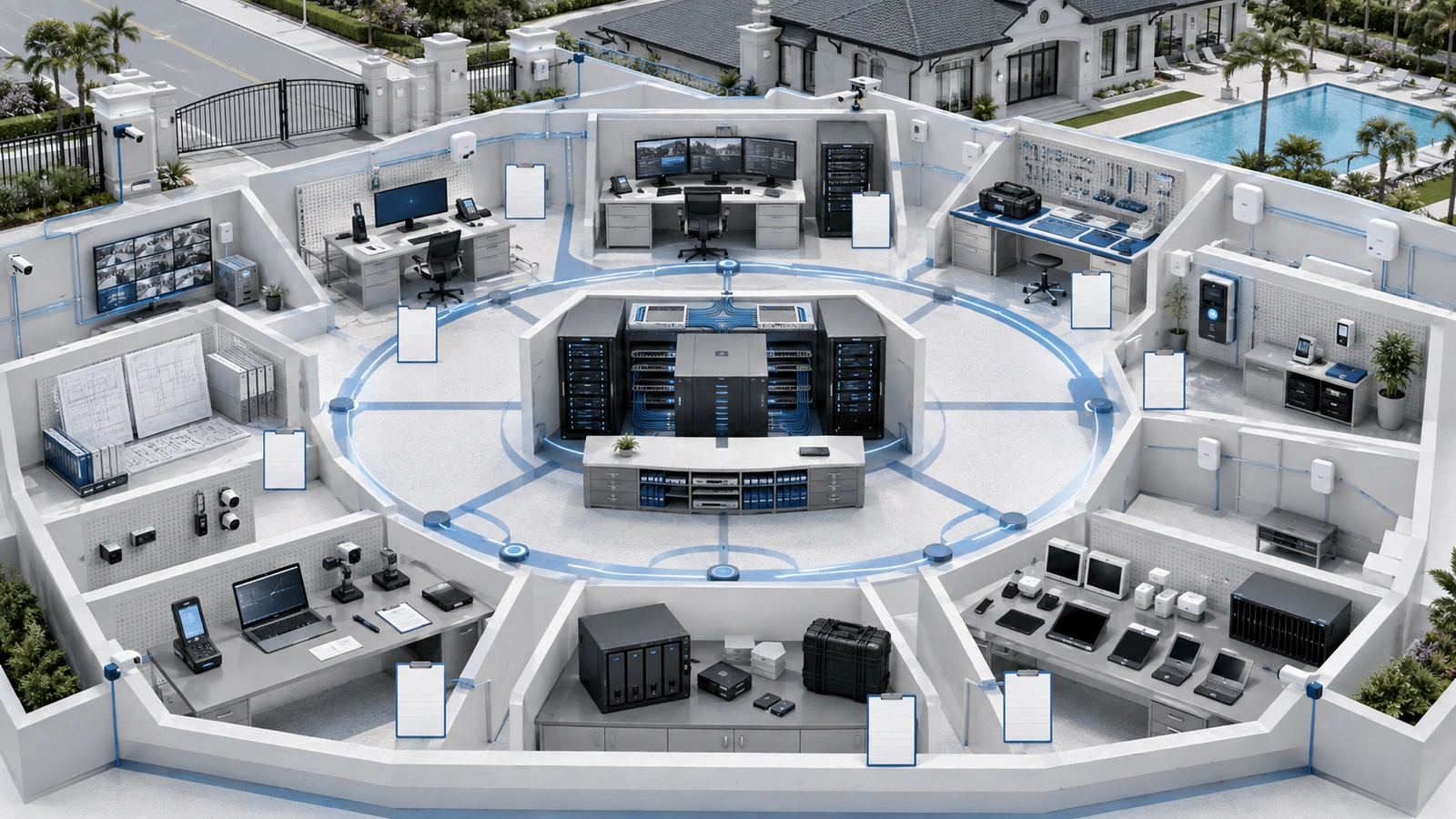
A policy library becomes useful only when it is approved, communicated, incorporated into working procedures, and periodically reviewed.
Minimum Network Policy Adoption Checklist
- Assign an owner and approving authority for each policy.
- Confirm scope across residents, guests, staff, administrators, vendors, devices, and locations.
- Identify the SOP, form, checklist, or record required to support each policy.
- Confirm property ownership of essential accounts, documentation, and backups.
- Move credentials and recovery information into an approved secure vault.
- Separate guest, staff, administrative, vendor, and operational access appropriately.
- Define approval and documentation requirements for infrastructure changes.
- Establish incident-reporting channels and escalation responsibilities.
- Document how exceptions are requested, approved, limited, and reviewed.
- Communicate relevant requirements to staff, residents, board members, and vendors.
- Record the effective date, version, last review, and next review date.
- Review whether policies are actually being followed and simplify ineffective requirements.
Enforcement should be consistent and within the property’s authority. Technical controls, staff procedures, contracts, training, and resident communications should align with the approved rules.
A policy should also be revised when systems, vendors, legal requirements, governing documents, or operational responsibilities change. Repeated exceptions often indicate that a policy or workflow no longer reflects reality.
Final Perspective
Basic network policies are not intended to turn a residential property into a corporate IT department.
They create a reliable decision framework for shared systems that residents, staff, management, vendors, and security operations may depend on every day.
The essential policy set covers acceptable use, guest access, staff and administrative access, vendors, changes, credentials, connected devices, backups, incident reporting, and documentation.
When each policy has a clear owner, practical procedure, authoritative record, and regular review, the property becomes less dependent on informal decisions and individual memory.
That operational clarity is often more valuable than another layer of equipment.